Permission planning

Scaffolding permits and permissions.

The answer depends on where the scaffold will stand and what work it will serve. A highway scaffolding licence, permission to use neighbouring land, consent for building work and scaffold inspections are separate questions. Raise them early so the proposal and programme reflect the actual site.

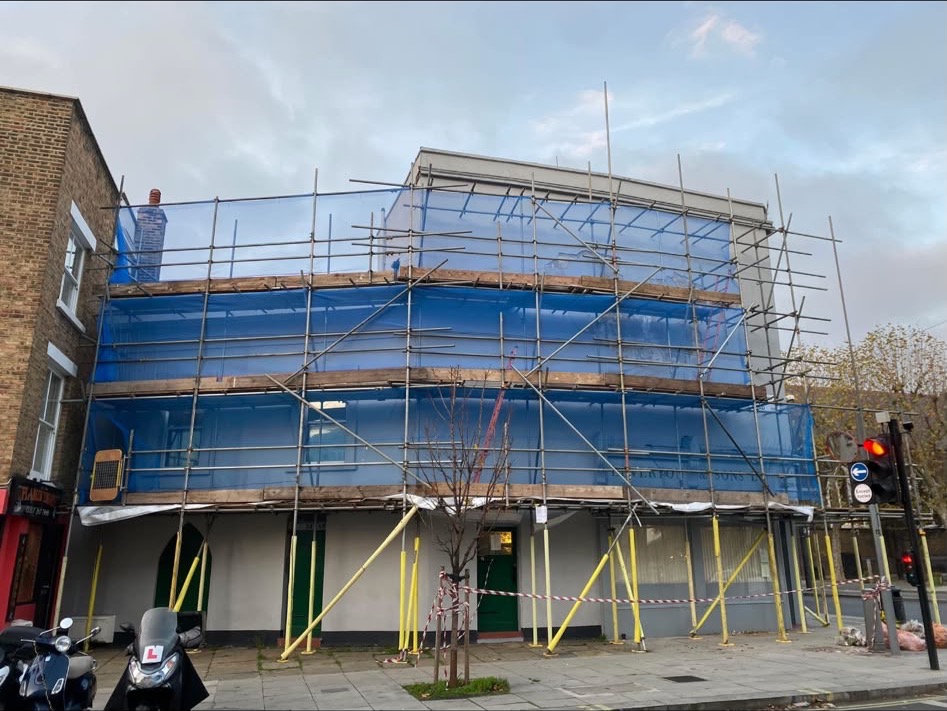
Scaffolding with blue netting around a corner building
Scaffolding around a corner building

Start with the position

Where will the scaffold sit?

On or over the public highway: A scaffold that occupies or encroaches over a road or pavement needs a licence from the relevant highway authority. The proposal may also need arrangements for people passing the site. Tell the scaffold supplier about the pavement, verge, parking and any overhang, even when the planned work is on your own building.

Wholly within private space: A highway scaffold licence may not be relevant, but that does not settle land access, planning or safety duties. Confirm the proposed position with the supplier; a paved area may still be highway.

Who applies?

Government guidance says the builder or scaffolding company is responsible for getting a highway licence for scaffold they put up there, and the customer should check that it is in place and covers the period of the work. Ask your chosen supplier who will apply and how the licence and any conditions affect the proposed dates and quote.

Find the right authority

Check the council for the actual site

Use the GOV.UK scaffolding licence finder with the site postcode, then check that authority's current conditions with the scaffold supplier. District names alone do not identify the highway authority: an Edgware address, for example, could fall on the Barnet or Harrow side. Relevant local starting points include Barnet's highways licence page, Harrow's scaffolding licence page and Enfield's scaffold guidance.

Ask whether the proposed footprint affects a pavement, road or other public route, who submits any application, and whether the authority requires a particular pedestrian or traffic arrangement. Confirm site-specific conditions and timing before fixing a start date.

Different permissions

Neighbour access and building consents

Neighbouring land: If supports, access or the work area would use someone else's property, raise it with them before promising access. Discuss and agree the proposed arrangement with the neighbouring owner and occupier as appropriate, and tell the scaffold supplier about any limits. A highway licence does not itself grant access to private land.

Boundary or party-wall work: The Party Wall etc. Act guidance may apply to certain work at or near a shared boundary; it is separate from planning permission. Do not assume it applies merely because a scaffold is nearby, or that it gives access for every type of work. The building owner and their professional adviser should establish whether notice or an agreement is required.

Planning and listed buildings: Ask the person managing the building work to check any planning conditions, conservation constraints and, where relevant, listed building consent. The answer turns on the proposed works and property, not a blanket rule for all scaffolds. Government historic environment guidance explains when work affecting a listed building's character needs listed building consent.

Tell the supplier about restrictions on fixing points, ground or access. The supplier can assess the scaffold proposal against those constraints; the customer and project team remain responsible for confirming permissions for their building work.

Safe use

Inspections are a separate duty

A licence does not replace scaffold inspection. HSE guidance says the scaffold user or hirer must ensure inspection after installation and before first use, at intervals of no more than seven days, and after circumstances that may jeopardise safety, such as high winds. Inspections must be carried out by a competent person. Agree who arranges and records them, and who receives the report, before the scaffold is used.

  1. Send the exact address, work areas and photos showing the building, ground, boundary and public route.
  2. Ask where each part of the scaffold is proposed to stand and whether a highway licence or other route arrangement is needed.
  3. Flag neighbour access and any planning, listed-building or site restrictions to the project team.
  4. Confirm responsibility for the application, inspection schedule and any change to the proposal in writing.

Common questions

Before you agree a date

Does a scaffold on my own land need a pavement licence?

Usually the highway question turns on whether the structure occupies or encroaches over the public highway. Confirm the exact footprint and boundary with the supplier; private-land access and work consents may still need attention.

Can Arkley arrange my permits?

Tell Arkley the location and any restrictions when you enquire. Ask who would handle each permission for the proposed job and have the arrangement confirmed in the quote. Do not assume a licence or consent is included.

What if the work changes?

Tell the scaffold supplier before the footprint, period or work area changes. Ask whether the proposal, permission or inspection arrangements need revisiting. See our cost guide for questions about scope changes.

For related planning, see how to prepare for installation, or browse service areas and scaffolding services.

Discuss your project

Tell us what you need access for.

Share the site address, photos and where access may cross a boundary or public route. We can discuss a scaffold proposal around those facts.