Is every Highgate property in a conservation area?
No. Check the designation and planning implications for the exact property with the relevant council or building professional.
Highgate scaffolding
Highgate projects need a site-specific brief. The place name alone does not identify the council, highway authority or working space at a particular address. Arkley can discuss access for roofing, exterior repairs and building work when you share the postcode, work faces and proposed dates.
Exact address
Highgate and neighbouring streets meet different borough boundaries. Confirm the relevant council for the exact property using the GOV.UK scaffolding licence finder, then check with the highway authority. If scaffold could use a road or pavement, the responsible highway authority and the structure’s actual position determine the permission route.
Start with the full address and photos showing the frontage, pavement and possible position. For a public-highway proposal, check Camden’s building licence page or Haringey’s scaffold licence form (PDF) as appropriate. Verify the authority for the exact street before applying.
Agree that for the specific project before dates are fixed. The permits guide lists questions to settle.
Building context
Some Highgate properties are within designated conservation areas, but the designation is not universal. Camden’s Highgate conservation area appraisal includes boundary maps, and Haringey’s Local Plan describes the Highgate conservation area and its Camden boundary. Use these published documents as starting points and confirm the current designation for the site with the council. Ask the relevant council or your building professional whether the specific property and proposed works have heritage or planning constraints.
Share known restrictions before discussing scaffold placement. A historic appearance, street name or postcode alone does not confirm designation.
Working frontage
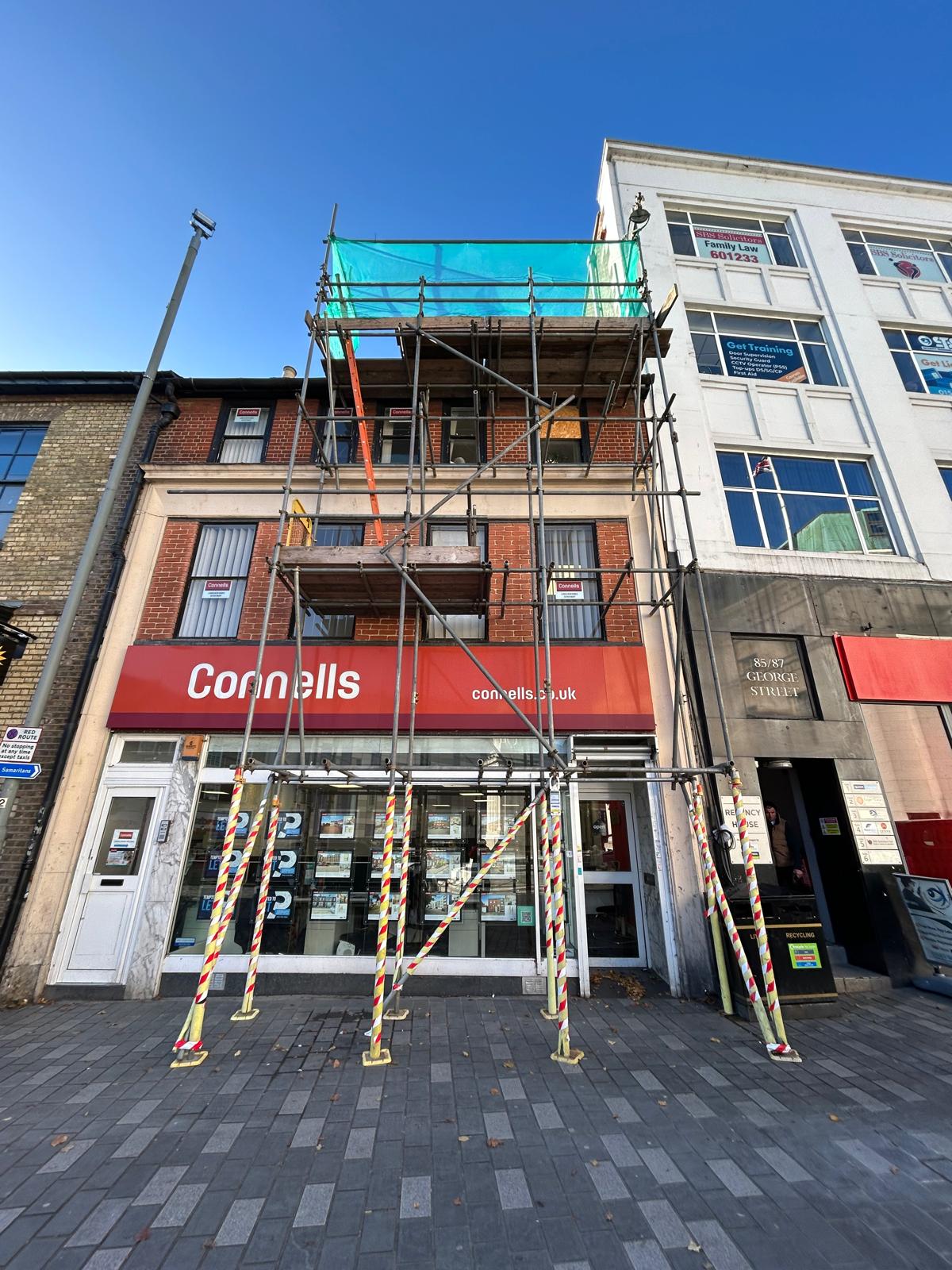
Photograph entrances, walls, trees, steps and the space where people walk or deliveries arrive. Tell us whether the property remains occupied and which routes must stay usable. If a neighbour’s land or shared area might be involved, confirm access with the relevant owner.
For roof access, ask the roofer to identify the work area and later tasks. For exterior repairs or painting, show the full elevation. Our roofing and painting and rendering guides can help frame the brief.
From brief to quote
The scaffolding costs guide explains factors that can affect a quote. Confirm the proposed scope and any separate permission arrangements before work begins.
Questions
No. Check the designation and planning implications for the exact property with the relevant council or building professional.
No. Confirm the exact site and highway authority first. Use the site address to identify the responsible authority. Camden and Haringey publish their own routes for scaffolding affecting public highways; confirm which applies to your site.
For nearby coverage, see North London. Arkley also works across Hertfordshire and welcomes enquiries further afield.
Discuss your project
A postcode, the work planned, approximate dates and a few photos are a useful start.